







How SEO, Paid Advertising, and Social Media Drive Ecommerce Growth
Discover how SEO, paid advertising and social media can work together to improve ecommerce visibility, engagement and growth.
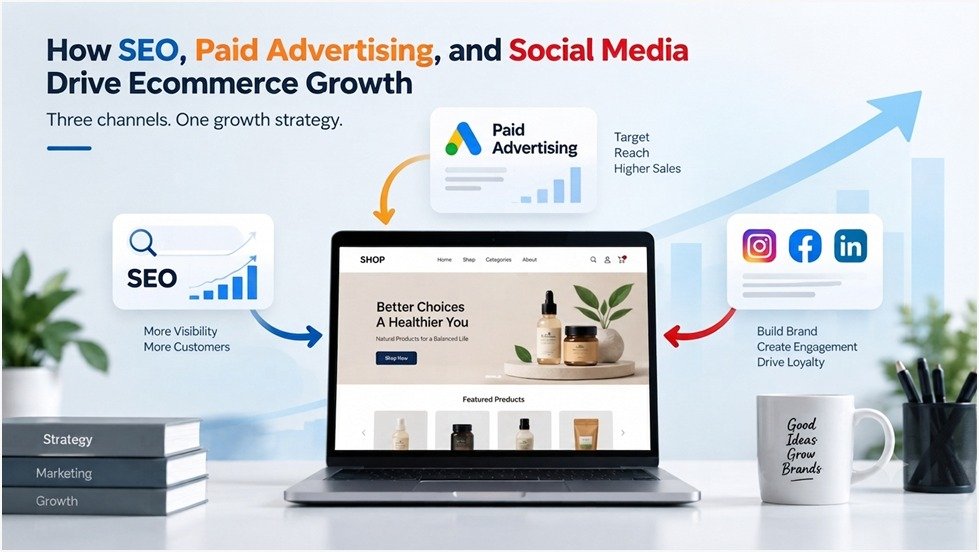
Ecommerce success is not only based on having a professionally created website and high-quality products. It requires a robust digital strategy that will help consumers find your products, recognize their benefits, and make purchases.
To achieve such success, businesses can use the services of a professional Google Ads agency that targets products through paid advertising, while an SEO agency can make products more visible through organic search results. At the same time, businesses can build brand awareness and audience engagement using social media marketing.
Why Ecommerce Businesses Need a Connected Marketing Strategy
The e-commerce industry is very competitive, and customers can find multiple brands and products available online. Just having an online store will not automatically ensure visibility and customers.
Businesses need to constantly work on visibility through various platforms, including search engines, advertising networks, social media, and other digital channels.
Integrated marketing enables different channels to work for different phases of the customer journey. Businesses can use SEO to bring visitors organically, paid advertising to ensure additional visibility, and social media to gain awareness and engagement.
SEO Builds Long-Term Ecommerce Visibility
Search engine optimization is essential when trying to increase the visibility of ecommerce websites within organic search listings.
Consumers frequently use search engines to conduct research, compare products, locate brands, and gather information that helps them make informed purchasing decisions.
By increasing website visibility, businesses can attract consumers without necessarily relying entirely on paid traffic.
Ecommerce Website SEO
Various components of an ecommerce website can be optimized for SEO. These include product pages, category pages, website structure, content, images and technical aspects of the website.
Organic visibility normally involves continuous optimization rather than a one-time process. Search results can change because of fresh content from competitors, changes in search trends and search engine algorithm updates.
Product Page Optimization Supports Ecommerce SEO
Product pages are one of the most important sections of an ecommerce website because they connect search visibility with purchase action.
Factors such as product titles, descriptions, images, structured data, page structure and loading speed can affect both searchability and user experience.
SEO-optimized product pages should be informative and easy for visitors to understand. SEO is therefore not only about bringing traffic but also about creating useful pages for potential customers.
Category pages are equally important because they help organize products and target broader keywords. A well-structured ecommerce website helps both search engines and visitors understand the relationship between categories, products and related information.
Paid Advertising Provides Additional Search Visibility
While SEO can increase organic visibility, businesses can achieve their goals through paid advertising as well.
Google Ads enables businesses to launch campaigns based on searches, products, audiences and business goals.
Paid advertising can be optimized according to performance, with important metrics such as clicks, conversion rate, cost of acquisition and ROI being measured.
Services offered by a Google Ads agency may include campaign planning, keyword targeting, ad development, audience selection, budget management, conversion tracking and campaign optimization.
Google Ads and Ecommerce Conversion Strategy
Getting paid traffic to an ecommerce website is not enough. The landing page must provide a clear and relevant user experience.
Product information, images, prices, stock availability, shipping details, customer reviews and purchasing information should be easy to understand.
Conversion tracking is equally important because it helps businesses understand what happens after users click on their advertisements.
Campaign optimization can involve keyword changes, audience targeting, ad changes, budgets, landing pages and other campaign elements.
Social Media Strengthens Ecommerce Brand Visibility
Social media is a crucial medium through which customers can discover brands, engage with content, follow businesses and learn more about products and services.
For ecommerce companies, social media provides an opportunity to present product information in an engaging way.
A consistent strategy helps maintain visibility and build interaction with the target audience.
Social media marketing can include organic content, short videos, product-focused content, educational content, customer communication, paid marketing strategies and community engagement.
Social Media Marketing Supports Customer Engagement
When building an ecommerce brand, customers expect useful information and communication from the business in addition to product promotion.
Social media provides an avenue through which brands can maintain ongoing communication with their audience and respond to questions or feedback.
A social media marketing company may provide services such as content development, campaign management, engagement improvement, performance tracking and coordination with other digital marketing goals.
How SEO, Paid Advertising, and Social Media Complement Each Other
SEO, paid advertising and social media serve different purposes, but integrating them into a single strategy can help the channels complement each other.
SEO focuses on organic search visibility, paid advertising provides additional visibility, and social media supports brand awareness and audience communication.
Combining these practices creates multiple opportunities for potential customers to find and connect with a brand.
Search behavior can help businesses understand what content to create, social media can demonstrate customer interests, and advertising performance can provide insights about consumers.
Therefore, using these marketing tools together can be more useful than running completely separate campaigns.
Website Experience Plays a Major Role in Ecommerce Growth
Digital marketing techniques can attract visitors to an ecommerce website, but the website experience has a major effect on what happens afterward.
The website should be easy to navigate, mobile-friendly, fast and informative about products and purchasing.
Product pages need to provide useful information, while website navigation should allow visitors to easily discover relevant products.
The checkout process should also be convenient. Technical problems, unclear information, slow loading speeds and complicated navigation can create unnecessary barriers.
Measuring Ecommerce Marketing Performance
Consistent measurement is essential for digital marketing. Website traffic alone does not provide sufficient information about ecommerce performance.
SEO performance can be measured using metrics such as organic traffic, search visibility, keyword performance, click-through rates and organic conversions.
Paid marketing can be measured through clicks, conversion rates, cost per acquisition and conversion value.
Social media performance can be measured using reach, engagement, content performance, website visits and conversions.
Ecommerce businesses can also track conversion rate, add-to-cart actions, checkout activity, average order value, cart abandonment and revenue from individual marketing channels.
Analyzing these metrics together can help identify areas that need improvement.
NetCrafty Helps Businesses Build a Stronger Digital Presence
Managing each digital marketing service individually can make it challenging to maintain a consistent ecommerce strategy.
NetCrafty offers digital marketing and creative services covering different aspects of online business growth.
Services include SEO, performance marketing, social media marketing, website development, graphic design, video editing, branding and digital solutions for ecommerce.
Combining these services allows businesses to focus on different aspects of their online presence while maintaining a consistent digital marketing approach.
Building a Sustainable Ecommerce Marketing Approach
Ecommerce marketing needs continuous improvement rather than relying on a single campaign.
Search patterns, advertising performance, social media trends and customer expectations continue to change.
Businesses should therefore regularly review their digital marketing performance and make adjustments when necessary.
New content and SEO efforts, advertising optimizations and social media strategies may be required over time.
Conclusion
SEO, paid advertising and social media each have their own role in helping ecommerce businesses grow.
SEO can help generate organic search visibility, paid advertising creates opportunities to reach potential customers, and social media can support brand awareness and engagement.
A good ecommerce website brings these activities together through a convenient purchasing experience.
NetCrafty offers services ranging from SEO and social media marketing to Google Ads, performance marketing, website development, branding, graphic design and video content.
Combining digital marketing activities with ongoing performance tracking and website optimization can help ecommerce businesses create a structured growth strategy.
Frequently Asked Questions
In ecommerce, important strategies include SEO (Search Engine Optimization) for organic traffic, PPC (Pay Per Click) for targeting potential customers using Google Ads, and social media for engaging the target audience.
Key drivers include SEO for organic traffic, PPC such as Google Ads for reaching specific customers, and social media for engaging audiences and promoting the brand.
The ecommerce environment is highly competitive, so businesses need to promote their websites through search engines, paid advertising and social media channels to attract customers.
SEO helps attract traffic to an ecommerce site organically. Properly optimized product and category pages make information easier for potential customers and search engines to understand.
Google Ads agencies can handle campaign planning, keyword targeting, ad creation, audience selection, budget management, conversion tracking and ongoing campaign optimization.
Ready to Grow Your Ecommerce Business?
Build a stronger digital presence with SEO, paid advertising, social media and ecommerce solutions.
Contact NetCrafty